Friday, October 20, 2017

C8H10N4O2

This molecule is the ultimate pre-workout.  Additionally it's the ultimate day to day everyone-stays-alive molecule.  This wondrous molecule is called caffeine. 

Caffeine is something we take for granted, we look at it solely as a thing to wake us up on the morning, or function normally in society.  There are some definite perks to caffeine in your life, from diet to physical function. 

Caffeine is a stimulant.  One thing that it does is speeds up the impulse (action potential) of your nervous system.  This in turn speeds up your heart rate, forces additional signals to your muscles (which could be a factor in jumping higher or lifting heavier....if that's something you desire).  So, you can see an improvement in performance and thus body composition when you consume caffeine. 

By seeing an increase in performance, you can then improve your body composition.  So in the act of drinking your morning coffee, you may be able to actually see yourself lose some weight.  Obviously there's more to it than that, but in the end it something to consider. 

Now this effect has not been shown on everyone and too much caffeine may have the opposite effects, which would rapidly speed up your heart rate in which case you can't handle a workout without feeling like your heart will explode.  So, a cup or so before a workout may be beneficial, but a cup of coffee, an energy drink, and a few other things may not be most advisable. 

So pick up that cup of coffee and enjoy, you may be doing your body a huge favor later.  

Wednesday, October 18, 2017

What are my (your) goals?

On Monday, I decided to pursue a different workout program than I'm used to.  It's a deadlift every day program.  A large amount of this decision came with the goal that I've had for the last few years, which is to ultimately deadlift 500lbs.  This is not an impossible goal, but a difficult one. 

This is far from my singular goal.  It just happens to be my most easily measured goal.  If I'm able to pull over 500, then I could easily consider myself to be strong.  However, this would also only serve as a stepping stone to a heavier lift. 

Some other, and by far less measurable goals, are to be able to easily defend myself and my family in hand to hand combat.  While this may seem silly, it's important for me to be able to fight with any weapon, or weaponless.  I am of the belief that I am the weapon and that the "weapon" is only an extension of me.  This is why, if you see some of my live workout videos, that I devote so much time to boxing and other forms of combat. 

A third goal would be to become leaner.  This is not only a training goal, but a nutritional goal as well.  Training-wise, the deadlifting and boxing are doing well.  Additionally, I'm going ahead and doing a heavy bodyweight circuit for my upper body.  This is largely due to the beating my arms and shoulder take on a regular basis.  Combine what I'm doing as well as tuning up my diet, the leaner body should come.

None of what I want to accomplish is easy.  It requires my hard work, my dedication, and my ability to plan my workouts around my schedule.  Because I want to accomplish these things, I dedicate some time to the accomplishment of these goals. 

What are some of your goals?  Have you ever really thought of what you'd like to accomplish through exercise?  If you know your goals, why did you choose them?  These are questions that you should be asking youself before you decide you want or need to train.  Without goals, what is your purpose?  Take a few moments each day or each week and self-analyze your goals.  

Monday, October 16, 2017

When should you eat?

So in my previous two posts, I talked about calories and macros.  In this post, I want to go into when you should be eating.  First, you need to make sure that your calories are where they should be.  Before you figure out when, you need to make sure that this step is completed.  Failure to do so and the "when" doesn't even matter.

Next, the macros will vary with activity for the day and what the goal in mind is.  For instance, if it's just general weight loss, then a good 50/30/20 (Carbs/Fats/Proteins) should be good to go.  If you want to shred, almost a complete reversal of all of that would be more necessary.  So, depending on what you want, your macros should fall in line with that.

Regarding the timing, let's begin with pre and post workout.  Generally speaking, having a percentage of carbohydrates and proteins prior to workout is ideal, depending on how rigorous the workout is. For example, a 4-6 mile run has a very different energy requirement when compared to a 3x5 squat workout.  Thus, look at the general energy requirement.  If you are doing cardio in excess, go carb heavy.  If you are doing weight training in excess, go carb moderate.  If you are doing weight training light, then go fat heavy.  You see the idea here.

Post workout, you should always look at 10% protein (when compared to bodyweight).  For example, I'm about 215lbs, and therefore my post workout meal should contain around 21.5g of protein.  Carbs help, but when you are doing a voluminous workout, they are more important than a higher intensity & lower volume workout.

Breakfast is the next meal I'd target.  Some advice that I'd generally give is that if you're hungry when your feet hit the floor, eat a protein rich breakfast (eggs, etc.).  If you are like I have been lately, and not that hungry, go ahead and skip breakfast (I know right?!).  My breakfast is usually an abundance of coffee and not much else.  I generally don't eat until midway through the day, which is contrary to the popular advice given.  Now, it still depends on your calorie requirements, so you may need to spread this out throughout the day amongst small meals, but I don't function that way.

Finally, looking at dinner (or supper, depending on your culture).  This is where I receive the majority of my calories.   This is normal among American culture, and thus rather than try to fight it, I embrace it.  I usually get about 700-1200 calories in this meal, with the rest coming from one other meal of the day.  Thinking about it, after watching my dogs eat, this appears to be pretty normal for many animals.  T
hey eat 1-2x per day depending on the availability of food.  We, as humans, have access to so much food it's not even funny, and therefore we're fat, lazy, and generally unhealthy.

Since I've gone to 2x per day meals, I feel better, look better (I think), and function better.  I can still squat well over 300lbs, run over 5 miles without stopping, and feel good about the way I look.  Any further meals would just increase my calories to an excess amount and too few would result in me looking sickly.

Look at your food timing and frequency.  What happens when you eat at breakfast, lunch, or dinner?  Are your calories in excess or not?  Depending on your goals, this may be reasonable.  Evaluate your daily routine and you'll be surprised by what you're doing that you don't even realize.


Friday, October 13, 2017

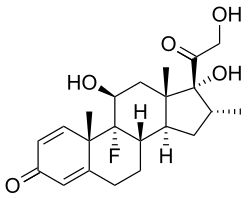
C21H30O5

Cortisol.  The stress hormone.  When under stress, the adrenal glands (yes, the same ones that make adrenaline) release this hormone.  It's principle function is to increase blood glucose levels through various processes, thereby producing energy.  This hormone sometimes receives a bad rap for increasing fat stores, but that's only one function of this hormone.

For the most part, this hormone is involved with immune suppressing and metabolic processes.  These processes are pivotal in providing energy during stressful situations.  When I refer to stress, this can be anything that illicts your anxiety.  So you can have a slight bump in cortisol when you are preparing for a test, for a baby to arrive, or even if your child is late coming home.  These are perceived threats to yourself and thus your body responds, and one way is to release cortisol.

Obviously the perceived threats aren't physical in this case.  From an evolutionary perspective (we're not getting into that discussion), when we as humans had to roam and gather or hunt our foods and we faced real life threats from things like other humans, large animals, or storms, this hormone acted in our favor.  Now, with modern society, abundance of this isn't exactly a good thing.  Mobilizing extra glucose, especially when you don't need it in your body has a tendency to allow for more fat to be deposited.  Obviously this isn't desired.

Some good points to consider are being in a fasted state.  If you fast, cortisol is released which in turn allows for your body to make more glucose, of which it wasn't getting from your diet at that point.  It also helps with glycogen production (basically glucose in the muscles).  These are desired effects during a fasted state due to the lack of incoming nutrition.  Some of the reason why you can reduce weight or fat mass while fasting.

Now you see how stress can play a role in this.  Some of it can be beneficial and ultimate produces the desired effect (see previous paragraph).  On the other hand, abundance of cortisol can weaken the immune system, increase fat storage, and thus make you generally unhappy and miserable.

Finding ways to cope with your stress can help you reduce your cortisol levels.  Left unchecked, and you may find yourself in a position you don't want to be in.


Thursday, October 12, 2017

Coming soon!

I'm hoping to begin a podcast.  I recently recorded my "pilot" episode and am working on having it hosted and distributed.  Once I am able to get all the logistics in a row, I'll post here, my Facebook group, my Instagram, and my twitter account.

I'm using the podcast instead of video because if you're anything like me, you spend some time in your car listening.  So it feels only natural to push a podcast and leave the videos to workout videos.

I'll hopefully be highlighting clients, other professionals, and Faith, family, & friends in my podcast.  Not that I don't want to do that here, but with that you'll hear their voices.

More to come on the podcast soon, stay tuned!

Wednesday, October 11, 2017

Squats, Pull-ups, and some other stuff...

Squats and Pull-ups.  These are definitely my two favorite lifts (yes, I count pull-ups as a lift).  I try and get an attempt on these at least once per week as they make me feel pretty strong and if done well, can crush your metabolism.

Squats are one of most effective and simplest exercises to perform.  You can perform these without weight, holding dumbbells, barbells, and several other methods of supporting additional weight.  When you use weight, you involve your upper body as well as your lower body.  The upper body is the support of the weight while the lower body is what moves the weight.

My favorite type of squat is a low-bar back squat.  Meaning, the bar sit's pretty low on my shoulder blades (it's made some of my friends nervous to spot before).  My least favorite type is honestly the front squat.  Front squats, while effective, are just sucky.  They humble me nearly every time I attempt to perform these terrible bastards.

Pull-ups on the other hand are one of the most difficult exercises to perform.  I had to get good at them for the Marine Corps and since then I've appreciated the difficulty and the value that pull-ups give.  It's one of those exercises that I never want to lose the ability to perform.  There have been times where I've felt that it were close to my unable to perform, usually after a hiatus, but I think the last time I couldn't' do any was in early high school.

Getting to one pull-up is one of the most difficult things for someone unable to perform them to do.  Once you get to 1, it's not too bad.  But getting to one can feel next to impossible.

I tend to take a slightly greater than shoulder width grip, palms out (in is a chin up), start from a dead-hang and pull your chin over the bar (this is a minimum).  There are other versions of this, but this is the most comfortable for me.  I also usually take a dip belt (a belt with a chain) and add some extra weight to make it harder.  The most I've done is +100lbs onto my body weight (for 1), though I tend to go with 45-60lbs.

Finally, sometimes I go with some abdominal exercises, low back/glute/hamstring exercises, and even some "arm" exercises to round out a training session.  Because the abdominal and the low-back muscles are pivotal in most lifts, I try to hit these in each training session.  It's not that they will all of a sudden decrease your fat mass over them, it's because they support the exercises that do.

Squats and pull-ups.  The kings of exercises.  Mastery of these will turn you into a beast.  Stay strong my friends.  

Monday, October 9, 2017

Macros, Macros, Macros.....What?

Macronutrients.  These are the big three of fats, proteins, and carbohydrates (carbs for short).  In nutrition it's kind of like the Big 4 of 80s Thrash Metal (Metallica, Megadeth, Slayer, and Anthrax).  Last week I discussed calories, and these bad boys are what those calories are made of.  If your total calories is 50% of the nutritional equation, how the are distributed makes up approximately 25-33% of the equation.

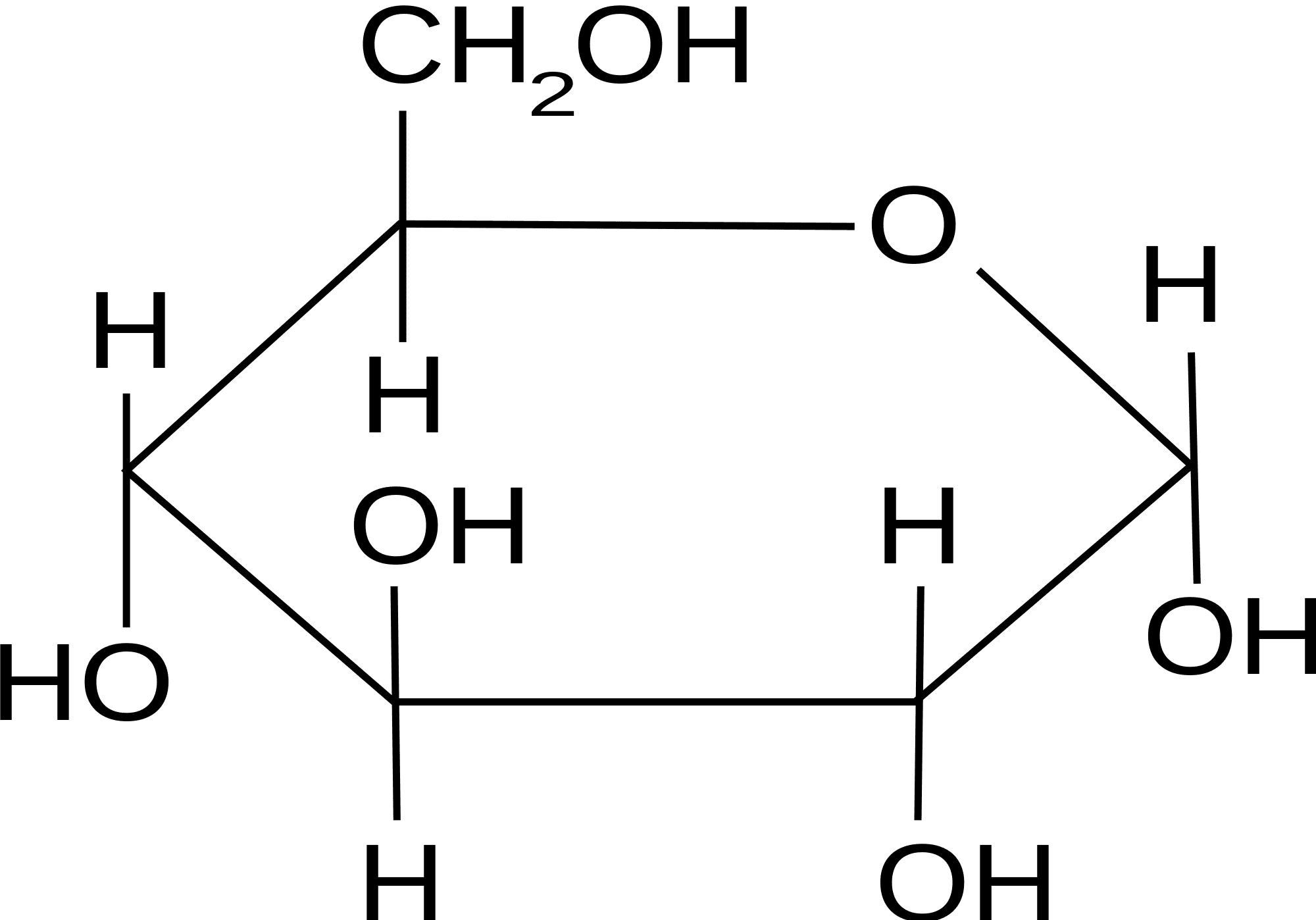
Glucose is the simplest carb molecule that we need to look at.  Ultimately all carbs, regardless of the structure, end up as glucose for your body to use as fuel.  For performance, this is hugely important.  Go ahead and carb deplete (<50g, your traditional low carb diet) for several days and try to do some really voluminous workouts such as a fast pace run or rep heavy squat, you'll find that you won't be able to do as well without carbs as you can with.  Regarding aesthetics (the way you look), these are hugely important as well.  With carbs, you can:
1.  Train harder
2. Train longer
3. Lose fat mass (under certain conditions)
4.  Gain muscle mass

Without carbs, you can:
1.  Lose fat mass (under certain conditions)
2. Increase cognitive function...you know, brain function

There are definite ups and downs to the consumption of carbohydrates.  But to keep it simple, know that they are hugely important to see gains in your physique and in your gym numbers.

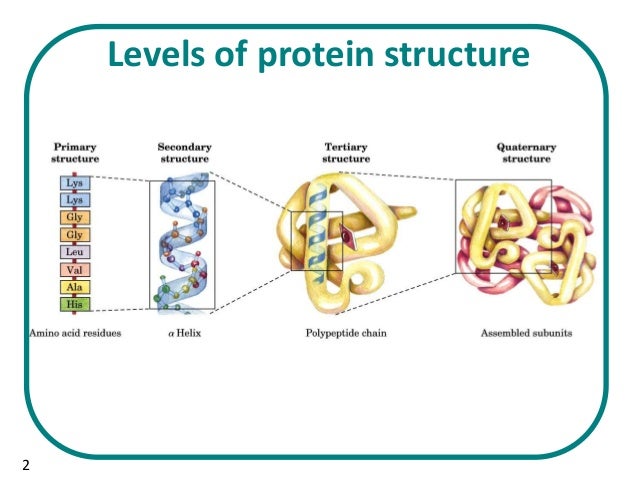
Protein is another hugely important thing to have in your diet.  Casual observation shows that men typically have an abundance while women are usually under on their protein needs.  Protein is important for muscle mass, enzymes, physiological processes, and much much more!  Inadequate protein from your diet results in your body taking it from your most abundant protein storage sites, your muscles.

Protein helps in a lot of ways, such as:
1.  Muscle structure
2. Enzymes for various physiological reactions
3.  DNA/RNA synthesis
4.  Feeling full when eating (causing weight reduction)
5.  Increased metabolic rate.

Without adequate protein in your diet, you feel hungrier more and ultimately will gain more fat mass without it than with it.

Fats are the misunderstood child of the nutrition world (though in many ways, so are carbs).  Your body cannot survive without fats.  Therefore, having some fat is vital to your overall health, performance, and appearance.
Having fats in your diet contribute to things like:
1.  Increased full feeling when eating
2.  Satiation
3.  Synthesis & storage of some vitamins
4.  Thermoregulation
5.  Protection
6.  Energy

Fat is hugely important in your diet and it's important to know that at times it's really important to consume it.  Most of us, as Americans, consume plenty of fat and have plenty of storage fat within our bodies (hence the dad-bod).  We can improve our physiques by manipulating this very molecule that is found in such abundance in our foods.

Now you know the big three macro-nutrients.  Most suggest that a diet 50% carbs, 30% fats, and 20% proteins is adequate for our needs.  However my challenge to you is to sustain this and find how your body functions on it.  Diet is a constantly revolving mechanism and you'll have to vary your percentages based off of your activity, injuries, any a variety of other means.

Next week I'll dive into timing of these macro-nutrients and how that can be tremendous in improving your overall health and physique.  .