Carbohydrates, or carbs, are the nutrition world's best friend and worst enemy. For weight management, they are one of the major role players, with the other primarily being fats. However, with low carb diets in abundance out there, it's probably worth noting what the value of the carbohydrate is.
 Carbohydrates are basically sugar. Not sugar in the sense of what you'd add to tea or something, even though that is accurate, but any thing with the molecular structure similar to what you see in this image. Basically, they're broken down into single molecule sugars (monosaccharides), double sugars (disaccharides), and longer sugar chains (polysaccharides). Depending on the molecule, will determine which of these that they are.
Most sugars that are introduced to the body in any form eventually are broken down into glucose, which is a monosaccharide. Depending on the size of the molecule, the time to break it down is an important factor in weight management. So starchy foods, such as breads, oatmeal, potatoes, etc., take longer to digest than things like candy, cookies, etc., because of
the molecular structure.
Eventually, the sugars make it into your blood stream where they can then be routed into the muscle and other cells for energy production. They are a faster used form of energy over fats, and can be replenished quickly. So, for intense exercise, carbs are good. If you are not accustomed to exercise or at the least, intense exercise, then carbs may be used in slight, but then be stored in your fat cells for use later. So, this is why carbs sometimes make you fat.

When you're carb depleted, say on a low carb diet, your body will use it's internal carb stores (glycogen, a cellular storage form of carbohydrate) first. Afterwards, and the longer duration of the diet, your body is forced to use fat stores as energy because you've depleted it's carb stores. Therefore, when you are on a low-no carb diet, you lose weight, but in the form of fat. Usually these kinds of diets are best suited for those who engage in minimal exercise, figure athletes, and those who have an abundance of body fat on a non-training day.
I wanted to share the basic run down of carbohydrates with you because of it's villanous nature. Next week, I'll be discussing fats and how they're important for your overall health and well-being.
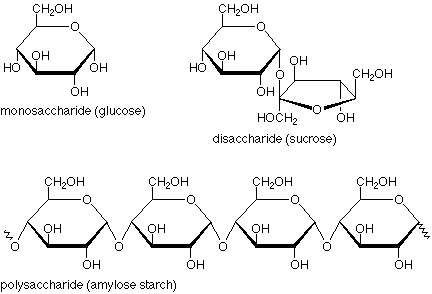 Carbohydrates are basically sugar. Not sugar in the sense of what you'd add to tea or something, even though that is accurate, but any thing with the molecular structure similar to what you see in this image. Basically, they're broken down into single molecule sugars (monosaccharides), double sugars (disaccharides), and longer sugar chains (polysaccharides). Depending on the molecule, will determine which of these that they are.
 Most sugars that are introduced to the body in any form eventually are broken down into glucose, which is a monosaccharide. Depending on the size of the molecule, the time to break it down is an important factor in weight management. So starchy foods, such as breads, oatmeal, potatoes, etc., take longer to digest than things like candy, cookies, etc., because of
the molecular structure.
Eventually, the sugars make it into your blood stream where they can then be routed into the muscle and other cells for energy production. They are a faster used form of energy over fats, and can be replenished quickly. So, for intense exercise, carbs are good. If you are not accustomed to exercise or at the least, intense exercise, then carbs may be used in slight, but then be stored in your fat cells for use later. So, this is why carbs sometimes make you fat.

When you're carb depleted, say on a low carb diet, your body will use it's internal carb stores (glycogen, a cellular storage form of carbohydrate) first. Afterwards, and the longer duration of the diet, your body is forced to use fat stores as energy because you've depleted it's carb stores. Therefore, when you are on a low-no carb diet, you lose weight, but in the form of fat. Usually these kinds of diets are best suited for those who engage in minimal exercise, figure athletes, and those who have an abundance of body fat on a non-training day.
I wanted to share the basic run down of carbohydrates with you because of it's villanous nature. Next week, I'll be discussing fats and how they're important for your overall health and well-being.