Tuesday, January 23, 2018

You're the inspiration!

As I was riding in the car last week, I got to thinking that I should share those people who have or continue to inspire me.  I can honestly say that this list will not consist of celebrities (mostly), largely because if they act in film or whatever, it's not tremendously inspiring.  There are only a small handful of people that I f
eel have brought me to where I am right now, but it's still important that I note them.  Also important to note, not all of these people are currently alive.

1.  Jesus Christ = This should be easy, but I feel like you should know/realize that he is super importan
t in my life.  Without him, we are nothing and with him, everything.

2.  Lewis B. "Chesty" Puller = The Marine's Marine.  He exeplefies confidence and heroism by only doing his job.  He changed lives for the better (unless you were Chinese or a Korean, the Northern kind) and his legacy still lives on.

3.  My parents = They get a team effort here, largely because they set the stage for me to become who I am today. 

4.  James "Chaos" (not Mad-dog) Mattis = Another Marine's Marine.  He keeps it straight and is always ready to throw-down on behalf of his Marines (and now the whole military). 

5.  Walt Disney = He created, he followed his dream, and he created an empire. 

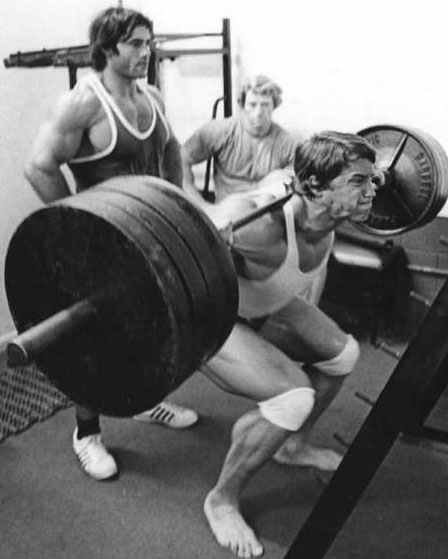
6.  Arnold Schwarzenegger = His work influenced me, in-part, to the career that I'm in. 

7.  Everyone whom I've ever come into contact with.  While this is extremely general, I try to take 1 ounce of wisdom from each and every person that I come across.  Each life is different and each have something to offer, and thus I become better through them. 

I believe that every person has something to offer, either good or bad.  Nevertheless, it's important to recognize that each of us have different experiences and different backgrounds.  When we be kind and nice to others, they will (eventually) project that knowledge to you and you gain from that.  Be a douche and it's unlikely that it will ever happen. 

This is a list of my inspiration, think about yours and why they are your inspiration.  This helps to figure out who you are and what you stand for. 

Thursday, January 18, 2018

How often should I run?

By run, I mean cardio, and by cardio I mean anything not lifting.  Cardio in some ways has characteristics to lifting, and in other ways none at all. 

When many do cardio, it's long & slow.  For that you can generally do it day in and day out without fail.  Your body
won't hate you (most of you) and early on you'll see progress, at least until you stop challenging yourself.  It's monotonous, mind-numbing, and yet can be oh-so-satisfying.  But you can do it every single day as long as your body says it's ok. 

Take interval training, or High Intensity Interval Training for you more technical savvy people.  This is often way more strenuous than your long & slow training (hence the "High Intensity" part).  Your ability to handle this with frequency is dependent on the action performed and even the duration of the activity. 

If you're running, you have to take into account the beating on your joints that will ensue when you do it often enough.  This means analyzing the terrain, the shoes
, the duration, and the speed of which you'll run.  If you're swimming, you have less (usually) to think about.  Generally speaking, running is simpler and easier to perform because we are all innate runners, at least in a limited capacity. 

If you were to do sprint running, at 100% every single day, it's likely your performance will suffer over time as you're just beating your body.  If you were to "cross-train" with say...rowing or swimming, you might be able to sustain 100% much longer and more frequently.  The same goes for long distance stuff, as you vary the intensity and type of training, it's much easier to sustain over time. 

The answer to "how often should I run?" is complex, as you were able to see.  Like lifting, it's very complicated and dependent on the individual and the choice of exercises.  In this case, variability is much more important to sustain a 100% effort level, but even then it's unlikely that you'll be able to sustain it long. 

So the best answer of how often is how often that you're able to.  That is always the correct answer, but know that the 100% effort is harder to come by.  Enjoy what you're doing and do it to the best of your ability.  

Wednesday, January 17, 2018

What are you looking for?

Since I have this blog up and post on it regularly, I wanted to ask you what exactly do you want me to cover?  What topics would benefit you the most?  Rather than myself talk about what I'm doing or what comes up in my life, I wanted to address this to you so that you can decide how the content (sometimes) is pushed and what it contains.  Please let me know in the comments below or in the comments on Facebook or Google+.  

Tuesday, January 16, 2018

How often should you lift?

A question that often arises among my clients is how often should they lift weights.  The answer is actually pretty complicated as each of them are different within their routines, ability, and even training age.  The probl
em is that virtually all advice that has been given is basically correct.   You must adapt it to your circumstance and not conform to what has been given to others. 

I'm an advocate of high frequency training.  This methodology varies the load, sets, reps, speed, and rest within the context of only a few exercises.  For example, I am performing a squat every day workout plan.  I have a client who is performing a dead-lift variation of this plan, but with less variability than mine.  The good part is you know what general movement you'll be performing that particular day, however which variation of that movement is up for grabs. 

Let's go with mine as an example.  It's built off a monthly plan, so for 30 days, I squat.  This goes against conventional wisdom that you should rest a muscle (or group of muscles) each day, but I promise you that you see some major progress each and every week.  The major variations of the squat are Back & Front Squats, though with and without a belt. 

The benefits of this is the exceptional amount of volume that we receive in the training.  We also receive a fair amount of intensity (weight) when we train high frequency.  This allows for some significant response from the muscles and thus an improved body composition and strength.  Before I conclude on the high frequency training, know that most elite level weightlifting programs consist of high frequency training, rather than the 1-2x per week training that most conventional programs suggest.

Now, this isn't suggesting that you should begin to lift the same lift(s) every single day, just that it's an effective method to improve strength & body composition.  Most however do an exercise only 1-2x per week only.  Now, there's some definite merit to this as well, especially in the muscle growth concept (and to some degree, strength).  Muscles need rest to grow, the central nervous system (the thing that's primarily responsible for making you strong) needs rest to improve.  The upside is that you can easily see improvement with 1-2x/week training, however the longer that you have in between training sessions the less practice that you receive and thus the less proficient you are at a particular thing. 

Sometimes training frequency doesn't matter, what matters is that you hit it each and every week.  As you continue, you'll see progress.  Fail to go ahead with training and overthinking it will result in you failing in general.  So even if you only know 1-2 things, go ahead and hit those things each and every day.  You'll see progress, and you'll see proficiency. 

Keep your consistency with your training, if it's every day or every other day or every week.  Your frequency only matters when you're highly trained, but know
that you need to train and train hard to see progress.  

Thursday, January 11, 2018

The music that moves you!

When you workout, what's the music that moves you?  What pushes you harder than you could without it?  Each of us gravitate towards a different genre, tempo, or mood. 

What I tend to listen to
My music choice is dependent on my mood.  It's not that I don't like a variety of genres, but I do have some I prefer over others.  It also depends on what I'm doing, such as driving, lifting, running, or relaxing. 

Most of the time when I'm driving I listen to podcasts over music, unless my day has been sort of stressful.  This allows for me to learn new things doing something I do anyway.  If any of the family is in the car, I tend to put on music, generally a radio station rather than my own playlists.  Usually it's the country station (for my wife) or the Christian station (for me) when they're in the car. 

Running is different.  Sometimes I zone out to some Marine Corps cadences (on Spotify) and other times I need a fast paced style like Metallica.  The running cadences are for that exact purpose, and if you've ever been in the military you know that it's sometimes helpful to allow you to keep up the pace.  With Metallica (and others like them) it's partially the speed of the music and the length of the songs.  An example would be Master of Puppets, which clocks in at around 8:48, that's about a mile for me.  You get a lot of these cheesy pop songs that clock in about 3 min and that's not enough to get you through anything. 

Screenshot of some of what I like
Lifting is dependent on what I'm doing.  Most of the time it's some high-speed power metal or Christian rock (or a mix of those).  More-often than not, it's background noise and I'm not particularly focused on anything other than what I'm doing.  With lifting, I kind of like the more epic storytelling approach, such as Ayreon (I know, you're probably like ?????).  If I'm lifting with a partner, then I do tend to go with whatever they want, since it's usually more mainstream than what I like. 

As you can see, I adjust my music for what I'm doing and who I'm with.  I made an attempt one day to put on what I like in one of my classes and that ended up with a lot of nope. 

So what music moves you?  Why does it?  Just something to think about as you do your thing in the world. 

Tuesday, January 9, 2018

Sabotage!

Goal setting at the new year is common.  And if you looked at my posts last week I referenced new years resolutions and how to either succeed or fail at them.  Today is more of a reference to how to fail, but mostly how to sabotage your goals.

Your goals are easy to sabotage.  If they weren't, would the goals you made last year be successful? 
Wouldn't the goals you made this year be different than last? 

It's not because you lack the motivation, but the accountability to achieve your goals.  Everyone's motivated to lose weight, to save money, and whatever else may be their goal.  Who holds you accountable
for these goals?  Do you have a coach, a training partner, a stockbroker, a spouse, even your dog to tell and keep you accountable for these goals?

Motivation is easy, accountability is hard.  You can be motivated to lose weight, but without being held accountable for your actions, it's a sabotage of your goal.  Accountability is the opposite of self-sabotage. 

Who do you trust with your goal? 
Why do you trust them?

My accountability is being held by my wife and my friends who undergo the same torture that I go through (lifting & fat loss).  We use the "team" approach, which allows for more than 1 person to hold accountable. 

Finally, to achieve the strength and determination to accomplish my goals, I pray.  Laugh if you will, but prayer is powerful and necessary to live a wonderful life.  So, not only are my wife and my friends my accountability partners, but Jesus is too.  I pray for success, for accomplishment, and to be granted with the ability to carry out God's will, not my own.  This is the ultimate way to block sabotage, as no one can sabotage the Lord. 

So who do you trust? I trust the Lord.  Why do you trust?  I trust Him because he can do all things. 

My success is His, and my failures are mine.  Trust in the Lord, as your friend, accountability partner, and guardian and all things will be done.


Wednesday, January 3, 2018

How to fail at your New Years Resolution.

In my previous post, I talked about how to succeed in keeping your New Years Resolutions.  This time, however, I want to talk about how to fail at your resolutions.  I find this to be important because more often than not we do fail, but don't understand why we fail.  This is actually simpler than succeeding at them. 

To fail at your New Years Resolutions:

1.  Make them last second, like December 26th-31st.
2.  Don't have someone hold you accountable.
3.  Don't actually make a note of what you want to accomplish, just talking about it doesn't work.
4.  Don't keep records of what you're doing. 
5.  Make them overly complicated and unattainable.
6.  Be impatient.

Most of the time, if you can stick to the basics such as simplicity, record keeping, and accountability you'll succeed.  You may not succeed quickly, but you'll succeed.  Failure is much simpler and we often get wrapped up in the complexity of what we'd like to do rather than being patient and riding out the storm.

An example would be weight loss.  Go into any gym in the United States in January and you'll see what we call New Years Resolutioners.  These individuals pay for a gym membership (great for cash flow!) and use it for about a week or two and then quit.  If you think about how long it took to gain that weight, think of at least 50% of that time to lose it.  Same with smoking or some other type of addiction, it takes time and patience to break these habits and they cannot be done overnight.  This is where accountability comes in. 

To fail at your resolutions, keep them complicated and be impatient.  Rome wasn't built in a day and neither are your goals.  Think of reaching these goals like sailing through the ocean, sometimes it's rough, sometimes it's calm, but you'll eventually get to your destination.