A question that often arises among my clients is how often should they lift weights. The answer is actually pretty complicated as each of them are different within their routines, ability, and even training age. The probl
em is that virtually all advice that has been given is basically correct. You must adapt it to your circumstance and not conform to what has been given to others.
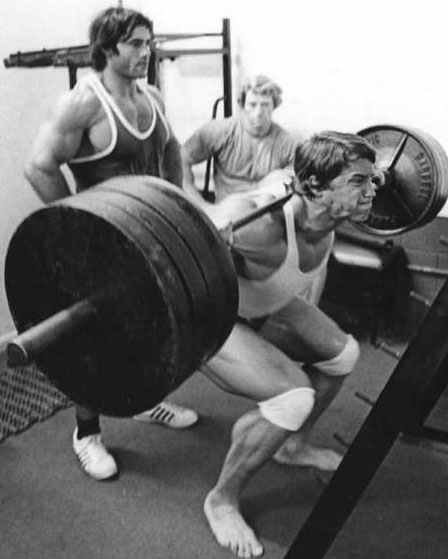
 I'm an advocate of high frequency training. This methodology varies the load, sets, reps, speed, and rest within the context of only a few exercises. For example, I am performing a squat every day workout plan. I have a client who is performing a dead-lift variation of this plan, but with less variability than mine. The good part is you know what general movement you'll be performing that particular day, however which variation of that movement is up for grabs.
Let's go with mine as an example. It's built off a monthly plan, so for 30 days, I squat. This goes against conventional wisdom that you should rest a muscle (or group of muscles) each day, but I promise you that you see some major progress each and every week. The major variations of the squat are Back & Front Squats, though with and without a belt.
The benefits of this is the exceptional amount of volume that we receive in the training. We also receive a fair amount of intensity (weight) when we train high frequency. This allows for some significant response from the muscles and thus an improved body composition and strength. Before I conclude on the high frequency training, know that most elite level weightlifting programs consist of high frequency training, rather than the 1-2x per week training that most conventional programs suggest.
 Now, this isn't suggesting that you should begin to lift the same lift(s) every single day, just that it's an effective method to improve strength & body composition. Most however do an exercise only 1-2x per week only. Now, there's some definite merit to this as well, especially in the muscle growth concept (and to some degree, strength). Muscles need rest to grow, the central nervous system (the thing that's primarily responsible for making you strong) needs rest to improve. The upside is that you can easily see improvement with 1-2x/week training, however the longer that you have in between training sessions the less practice that you receive and thus the less proficient you are at a particular thing.
Sometimes training frequency doesn't matter, what matters is that you hit it each and every week. As you continue, you'll see progress. Fail to go ahead with training and overthinking it will result in you failing in general. So even if you only know 1-2 things, go ahead and hit those things each and every day. You'll see progress, and you'll see proficiency.
Keep your consistency with your training, if it's every day or every other day or every week. Your frequency only matters when you're highly trained, but know
that you need to train and train hard to see progress.
em is that virtually all advice that has been given is basically correct. You must adapt it to your circumstance and not conform to what has been given to others.
I'm an advocate of high frequency training. This methodology varies the load, sets, reps, speed, and rest within the context of only a few exercises. For example, I am performing a squat every day workout plan. I have a client who is performing a dead-lift variation of this plan, but with less variability than mine. The good part is you know what general movement you'll be performing that particular day, however which variation of that movement is up for grabs. Let's go with mine as an example. It's built off a monthly plan, so for 30 days, I squat. This goes against conventional wisdom that you should rest a muscle (or group of muscles) each day, but I promise you that you see some major progress each and every week. The major variations of the squat are Back & Front Squats, though with and without a belt.
The benefits of this is the exceptional amount of volume that we receive in the training. We also receive a fair amount of intensity (weight) when we train high frequency. This allows for some significant response from the muscles and thus an improved body composition and strength. Before I conclude on the high frequency training, know that most elite level weightlifting programs consist of high frequency training, rather than the 1-2x per week training that most conventional programs suggest.
Now, this isn't suggesting that you should begin to lift the same lift(s) every single day, just that it's an effective method to improve strength & body composition. Most however do an exercise only 1-2x per week only. Now, there's some definite merit to this as well, especially in the muscle growth concept (and to some degree, strength). Muscles need rest to grow, the central nervous system (the thing that's primarily responsible for making you strong) needs rest to improve. The upside is that you can easily see improvement with 1-2x/week training, however the longer that you have in between training sessions the less practice that you receive and thus the less proficient you are at a particular thing. Sometimes training frequency doesn't matter, what matters is that you hit it each and every week. As you continue, you'll see progress. Fail to go ahead with training and overthinking it will result in you failing in general. So even if you only know 1-2 things, go ahead and hit those things each and every day. You'll see progress, and you'll see proficiency.
Keep your consistency with your training, if it's every day or every other day or every week. Your frequency only matters when you're highly trained, but know
that you need to train and train hard to see progress.


